
Spray Foam
stopping your mortgage?
Need Spray Foam Removal.
Open-cell or closed-cell, our in-house teams remove spray foam insulation safely and issue professional completion documentation recording the work carried out.
Removal deals with the foam. Remediation deals with the roof.
Survey. Removal. Roofing. Evidence. Completion.
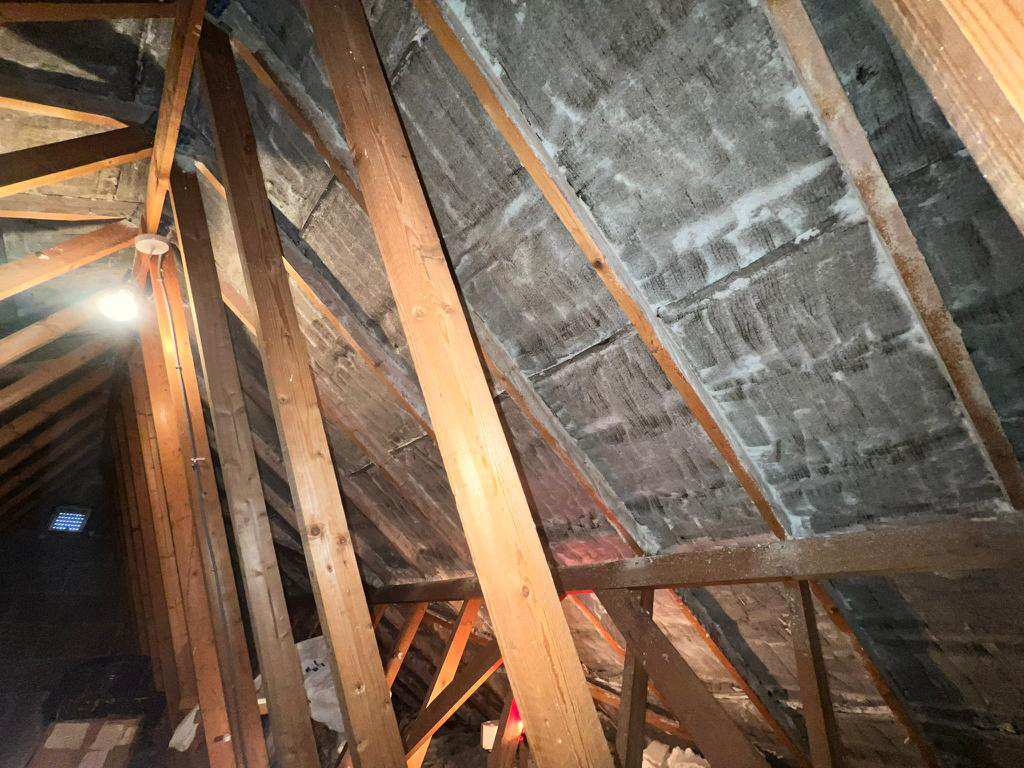
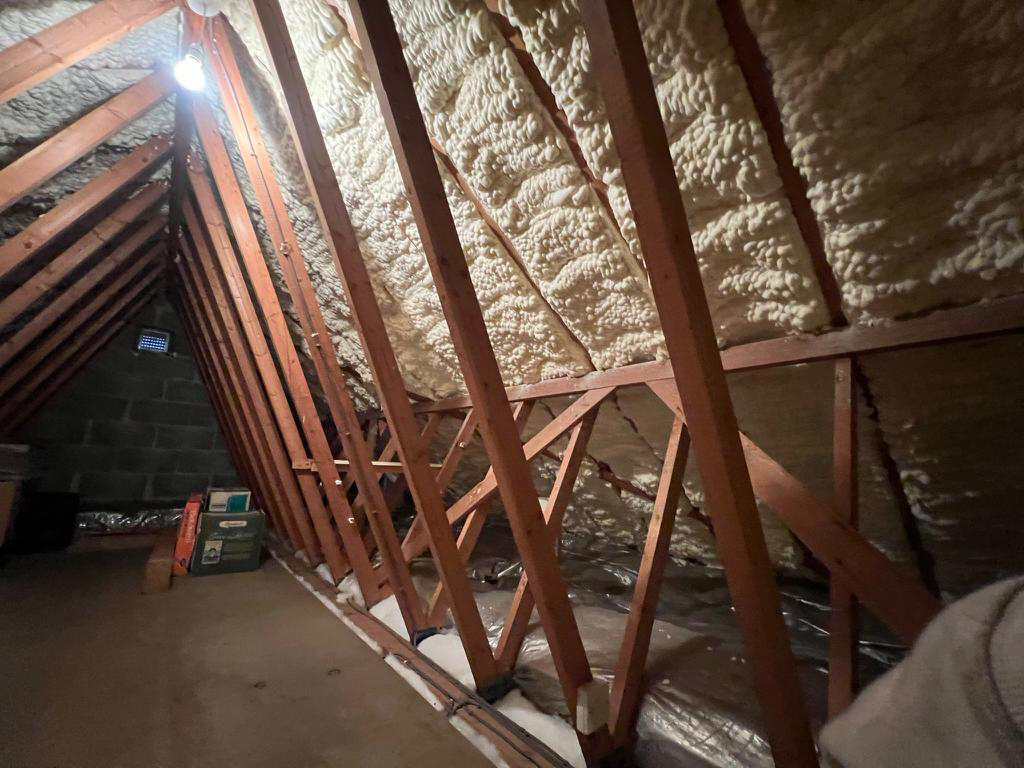
Not just a certificate
A documented record of what happened to your roof: survey photographs, the build-up as we found it, the works carried out and completion evidence.
01 The problem
A roof you can't sell, mortgage, or insure.
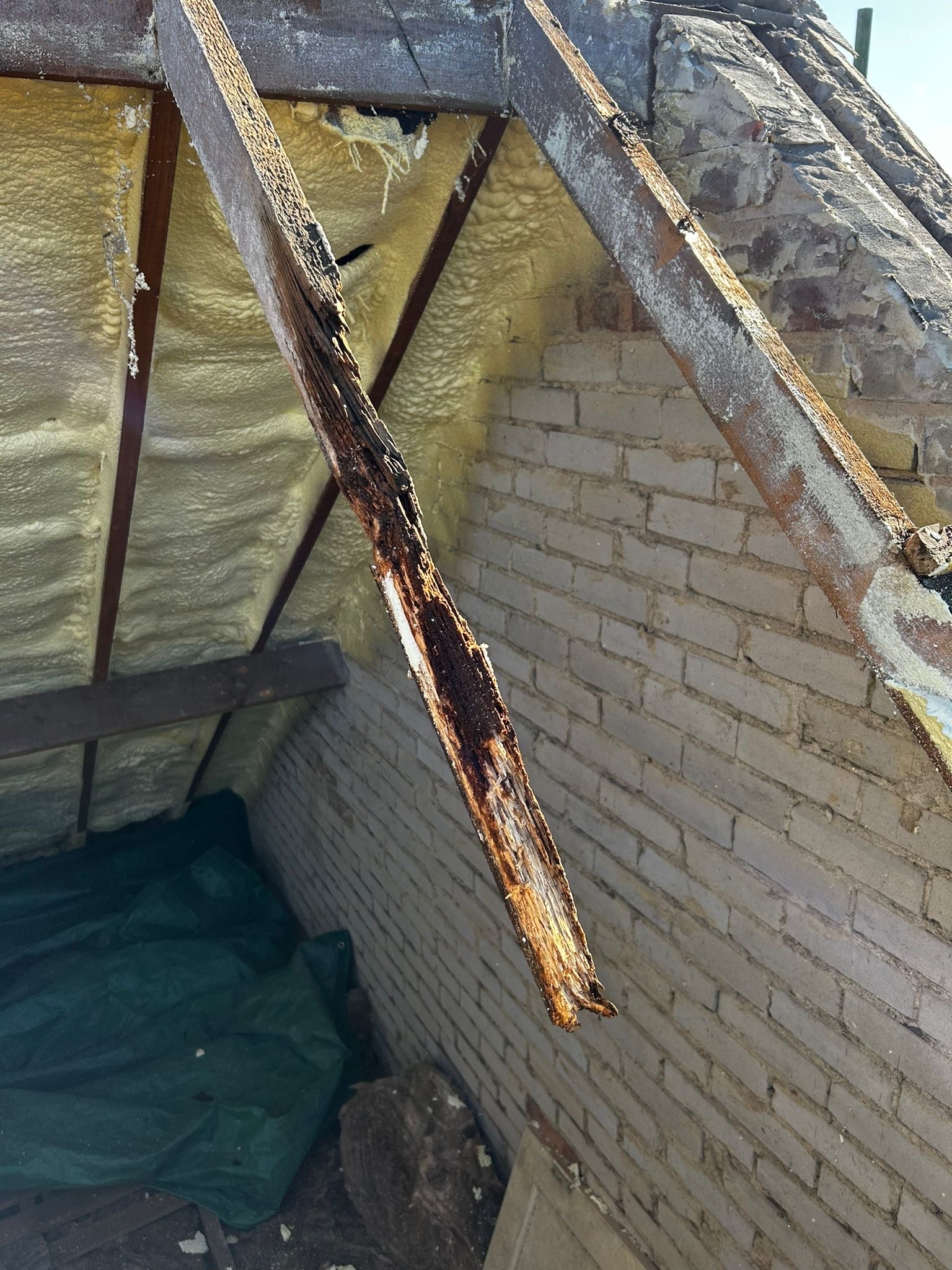
Trapped moisture, rotting timbers
Foam forms an impenetrable barrier on rafters. Water that would normally evaporate is held against the wood, leading to decay and structural weakness over months and years often hidden until it's serious.
Surveyors can't see what's underneath
A standard valuation requires visual inspection of roof timbers. Foam makes that impossible, so the surveyor flags the property as a risk lenders default to refuse.
Off-gassing and indoor air quality
Improperly mixed or ageing foam can release isocyanates and VOCs into the loft and the living space below, a concern raised in multiple UK government and industry reviews since 2022.
Insurance and warranty exclusions
A growing list of household insurers now exclude damage linked to spray foam, leaving owners exposed to repair costs they would normally be covered for.
What the UK’s official surveying body says
The Royal Institution of Chartered Surveyors (RICS) recognises in its consumer guidance that spray foam insulation can affect mortgage valuations and surveys because it conceals the roof structure, preventing the visual inspection a surveyor is required to carry out. RICS also notes that where foam is poorly installed or seals in moisture, a leak behind it can go undetected and lead to timber decay. Read the official RICS guidance →
02 Lender attitudes
Who's saying no to spray foam and require spray foam removed
Lender attitudes to spray foam have tightened in recent years, and many lenders now ask for foam to be removed from the roof space before they will lend. Policies vary between lenders and change over time, so check the current position with your own lender or broker.
Smaller building societies and specialist lenders are following the same trajectory. Countrywide provides professional completion documentation recording the work carried out, which a surveyor or lender may request during a sale or remortgage.
03 Open-cell vs closed-cell
Open-cell or Closed-cell ?
Two products. Two completely different removal jobs. We handle both, but the cost, time, and structural impact depend entirely on which one's been sprayed onto your timbers.
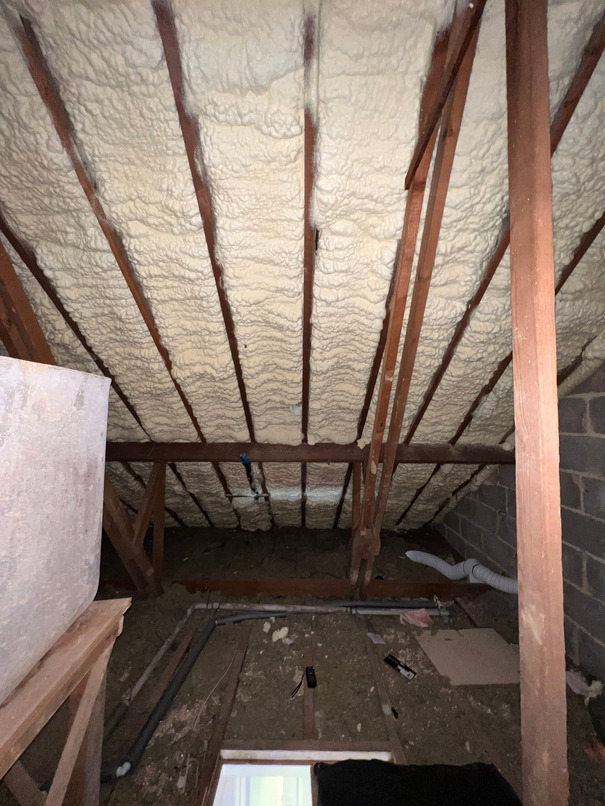
Softer, Breathable, Recoverable.
Open-cell foam is lower density and remains slightly flexible. Our teams cut, peel, and brush it away from timbers, then inspect each rafter, replace any compromised felt, and re-insulate to current standards.
 Sample · Open-cell
Dense, Bonded, Aggressive.
Closed-cell foam adheres so tightly to roof timbers that removing it intact is rarely possible. Most closed-cell projects involve replacing rafters, stripping the roof externally, and laying new membrane and tiles before re-insulating.
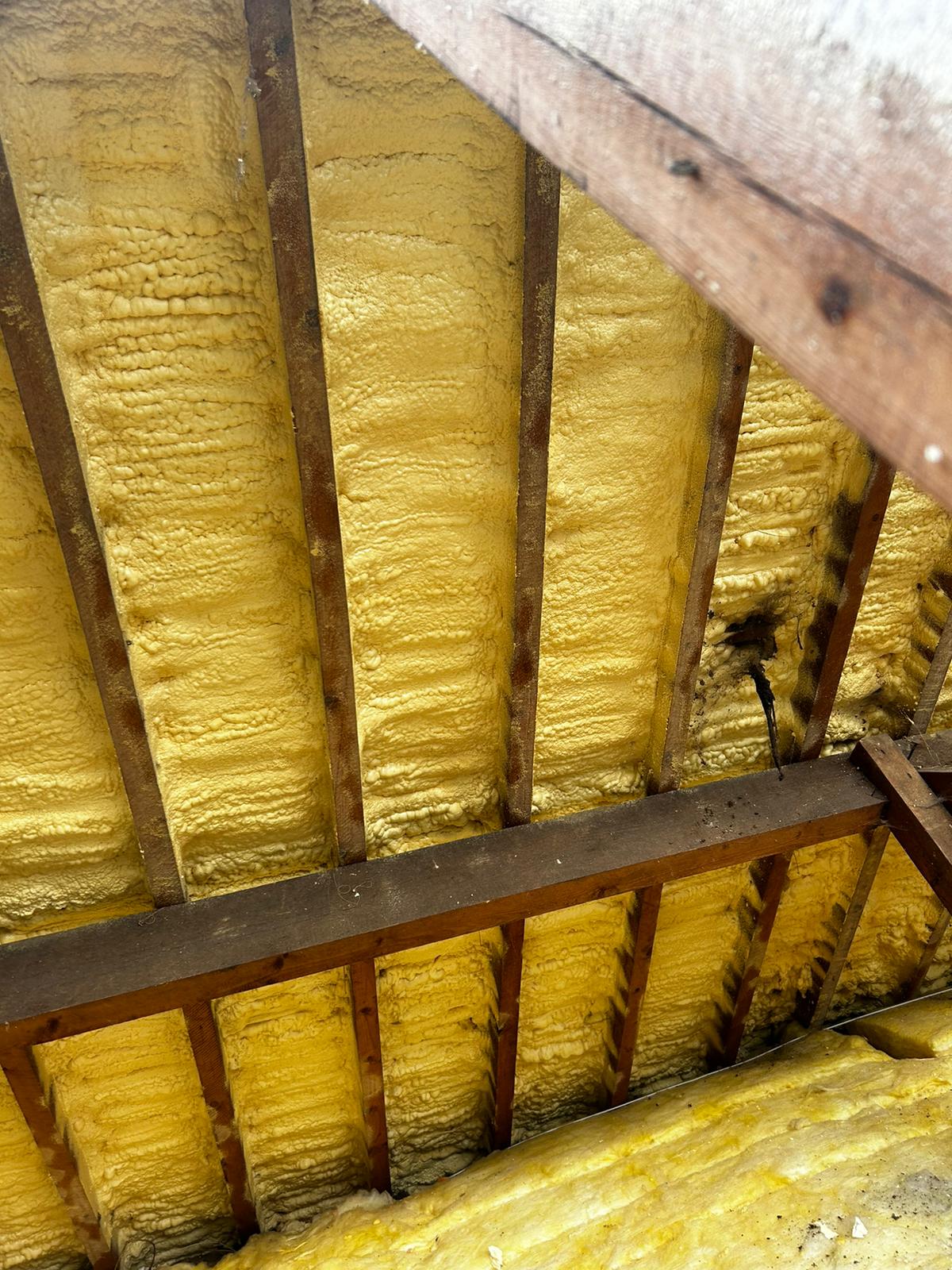 Sample · Closed-cell
Before & After
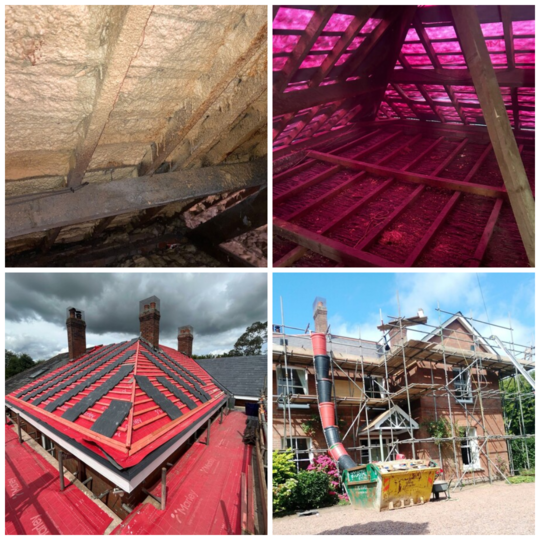
The spray foam removal transformation
speaks for itself.
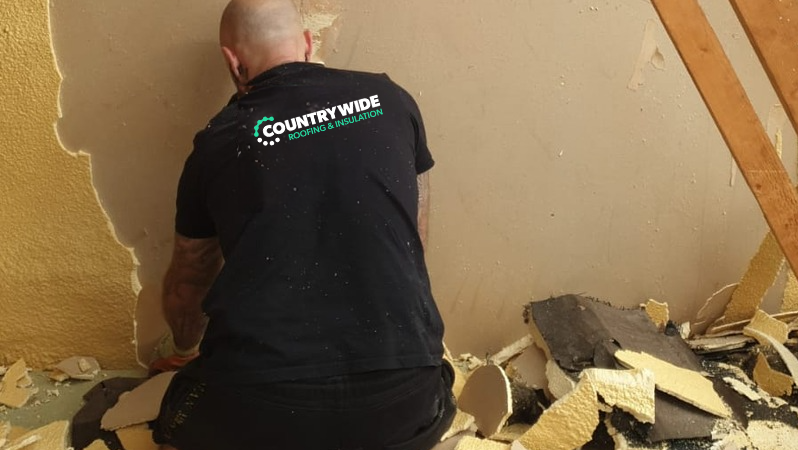
Spray foam removed cleanly and completely, with the rafters left dry, clear and fully documented.
Open-cell spray foam Mortgage Refused, West Midlands
05 Our process
Four steps to a properly remediated roof.
Directly employed teams. No subcontractors. Every job follows the same documented process from a free initial survey to a same-day completion certificate filed with your solicitor.
Survey & Inspection
A qualified inspector visits, identifies foam type, photographs every rafter, surveys the exterior, and returns a fixed-price written quotation within 48 hours.
Schedule & Scaffold
Materials ordered, scaffolding booked, waste-carrier paperwork filed. Where the scope of a re-roof requires Building Control involvement, Countrywide coordinates the process with LABC as part of the project. Your project manager is your single point of contact end-to-end.
On-Site Removal
In-house teams arrive, set up containment, and walk you through the work on day one. Eight-to-five working hours, roof secured overnight, daily progress photos to your inbox.
Certificate & Handover
Completion documentation recording the work carried out is issued. CORC certificate registered. Building control sign-off coordinated. Forwarded directly to your solicitor or broker on request.
06 Indicative pricing
What it actually costs for spray foam removal.
Fixed-price quotations after survey. 0% VAT applies to qualifying loft insulation supplied and installed. The figures below reflect the range we see across UK projects in 2026. Your written quotation is the price you pay.
Tier · Open-cell spray foam removal
Lower density · faster turnaround
For a typical 3-bed semi. Typical 2 to 5 day project. Final cost depends on property size, access and the volume of foam to be removed.
- ✓ Full foam removal & rafter brushdown
- ✓ Timber inspection & felt replacement where needed
- ✓ Loft re-insulated to current Part L (Knauf loft roll included)
- ✓ Professional completion documentation
Tier · Closed-cell roof remediation
Bonded foam · structural rebuild
Typical 7 to 14 day project. Final cost depends on roof size, access, covering type, existing roof condition and how far the foam has penetrated the roof build-up.
- ✓ Strip-and-rebuild of affected roof sections
- ✓ Replacement timbers, breathable membrane & tiles
- ✓ Scaffolding, waste disposal & building control
- ✓ 10-year insurance-backed guarantee on qualifying roof replacement work
08 Instant estimate
What will it
cost to remove?
Fill out the form to receive a quick estimate
09 What customers say
Real results.
Real homeowners.
"I had a great experience dealing with Countrywide Roofing & Insulation. They explained everything clearly from the survey right through to the completion certificate. The team were first class, and they even brought the date forward so I could proceed with the estate sale."
"Ours was a difficult and awkward job but the experienced Countrywide teams always had it under control. Staff were courteous and respectful throughout and the inevitable small problems were dealt with speedily."
"Great company. Punctual, efficient, and straightforward to deal with. The spray foam removal team removed the foam manually with scrapers on the rafters. They were courteous, took my feedback into consideration, and left everything spotless."
"Excellent communication. The quote was spot on and the lads worked later until the job was done. Arrived each morning at the agreed time, cleared up after themselves, and were very polite. Highly recommend."
Coverage across England and Wales,
local teams.
Regional teams cover England and Wales. Projects fast-tracked on request.


Frequently asked questions
Why do mortgage lenders reject properties with spray foam insulation?
Lenders reject spray foam properties because spray foam traps moisture, damages roof timbers, and creates uncertainty around structural integrity. Lenders and their surveyors set their own criteria, and may ask to see documentation recording the work carried out.
Can I remove spray foam insulation myself?
DIY removal is not recommended. Spray foam is highly adhesive and improper removal will damage your roof and leave residues. Depending on the lender, valuer and property, supporting documentation may be requested. No private contractor's certificate guarantees lender acceptance.
How long does spray foam removal take?
Open-cell removal typically takes 2–5 days. Closed-cell removal takes 7–14 days because timbers often need replacing.
How much does spray foam removal cost?
Open-cell spray foam removal typically starts from around £3,150 inc. VAT for a typical 3-bed semi, with the final price depending on the size of the loft, access and the amount of foam present. Closed-cell roof remediation typically starts from around £12,500 inc. VAT, with the final cost depending on roof size, access, covering type, existing roof condition and how far the foam has penetrated the roof build-up.
Can spray foam removal help resolve mortgage or survey concerns?
Removing the foam addresses the issue most surveyors and lenders raise, and we provide completion documentation recording the work carried out. Each lender applies its own criteria, so whether a property is accepted is decided by the lender or surveyor case by case.
What is the difference between open-cell and closed-cell removal?
Open-cell foam is softer and easier to remove. Closed-cell foam is denser and harder, often requiring timber replacement, making it more complex and costly.
12 · FREE NO-OBLIGATION SURVEY
Get the foam out.
Get your mortgage back.
Tell us your postcode and roughly when the foam was sprayed. We'll book
a free site visit and have a fixed-price quotation in your inbox within 48 hours.
COMPLETION DOCUMENTATION
Professional documentation recording the work carried out
48-HOUR QUOTATION
Fixed price · no surprises after survey
IN-HOUSE TEAMS ONLY
Directly employed crews · no subcontractors, ever
FREE NO-OBLIGATION SURVEY
No deposit required · zero obligation
