Spray Foam Removal in Manchester and Greater Manchester
Countrywide Roofing & Insulation removes open-cell and closed-cell spray foam from roofs and lofts for homeowners in Manchester and Greater Manchester. We are based in Bournemouth, so we describe ourselves as serving Manchester rather than being based there.
If spray foam has been applied to the underside of your roof, you may have been told that it needs to come out before a sale, a remortgage or a roof repair. This page explains what the work involves and what to ask before you commit to a company. Our spray foam removal service page covers the full service.
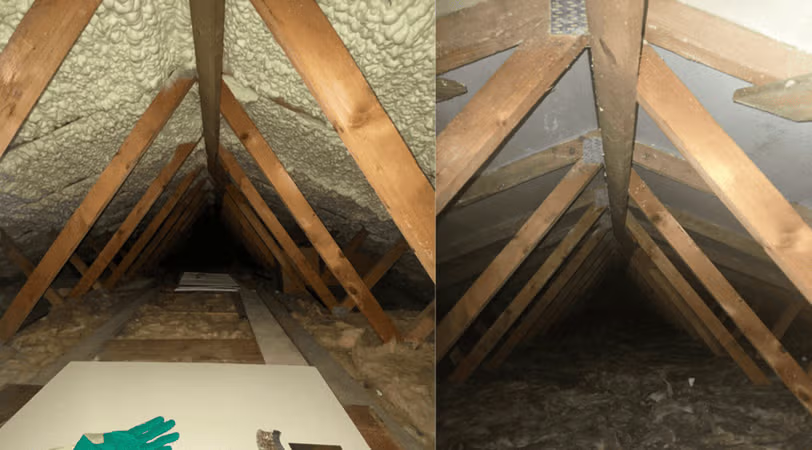
(Drag arrows on the image to show the spray foam insulation before and after it has been removed.)
Spray Foam Smart Estimator
Fill out the form below to receive a quick estimate.
Open-cell or closed-cell spray foam?
The type of foam affects how the work is carried out, so identifying it is part of the survey.
Open-cell foam is softer and lighter. Our page on open-cell spray foam removal explains how it behaves in a roof and how it is removed.
Closed-cell foam is rigid and bonds firmly to rafters, battens and tiles, which makes it harder to remove without disturbing the roof. Our page on closed-cell spray foam removal sets out what that involves.
If you are not sure which you have, the survey will establish it. Photographs of your loft can help.
Why spray foam is removed
Spray foam sits directly against the roof timbers and the underside of the roof covering. That can hide leaks, moisture and timber decay, and it can stop a surveyor from inspecting the roof structure. Homeowners usually come to us after a survey has flagged the foam, or because they want the roof checked before selling or remortgaging.
Once the foam is off, the exposed timbers and felt can be inspected for moisture damage or decay. If that inspection finds a roof that needs repair or replacement, we will discuss it with you before any further work. See our roof replacement page for that service.
Selling, buying or remortgaging with spray foam
Spray foam can restrict inspection of the roof structure. Lending decisions depend on the lender's policy and the individual property assessment, so the best first step is to ask your lender or mortgage broker what they need to see.
Removal and documentation do not guarantee a sale, a mortgage, insurance cover or lender approval. What they can do is allow the roof structure to be inspected and give you a record of what was done, which a surveyor or lender may ask to see.
Questions homeowners ask
Do I have to remove spray foam before I sell?
Not always. It depends on your buyer, their surveyor and their lender. If a survey has flagged the foam, ask the buyer's lender or your solicitor what they need. We can explain what the work involves.
Will removal mean my house can be mortgaged?
We cannot promise that. Lenders make their own decisions. Removal and documentation do not guarantee a sale, mortgage, insurance cover or lender approval.
What documentation will I receive?
You receive documentation recording the work carried out.
Can I remove spray foam myself?
We would advise against it without professional advice. The foam is bonded to the roof timbers and coverings, and the roof can be damaged. Our article on whether you can remove spray foam insulation yourself explains why.
Discuss your spray foam removal with our team
Tell us about your roof and the foam you think you have, and we will explain the next step.
How a removal project works

Step 1
Survey. We inspect the roof space, identify whether the foam is open-cell or closed-cell, and look at the condition of the roof structure behind it.

Step 2
Preparation. We agree the programme with you and protect the areas around the work with dust sheets.

Step 3
Removal. The foam is taken off the roof timbers and the underside of the roof covering, taking care not to damage the roofing felt.

Step 4
Cleaning and inspection. Debris is cleared away and removed from site, and the exposed timbers can then be inspected for moisture damage or decay.

Step 5
Remedial work, where needed. If repairs or new loft or rafter insulation are needed, we discuss them with you first.

Step 6
Documentation. You receive documentation recording the work carried out.